
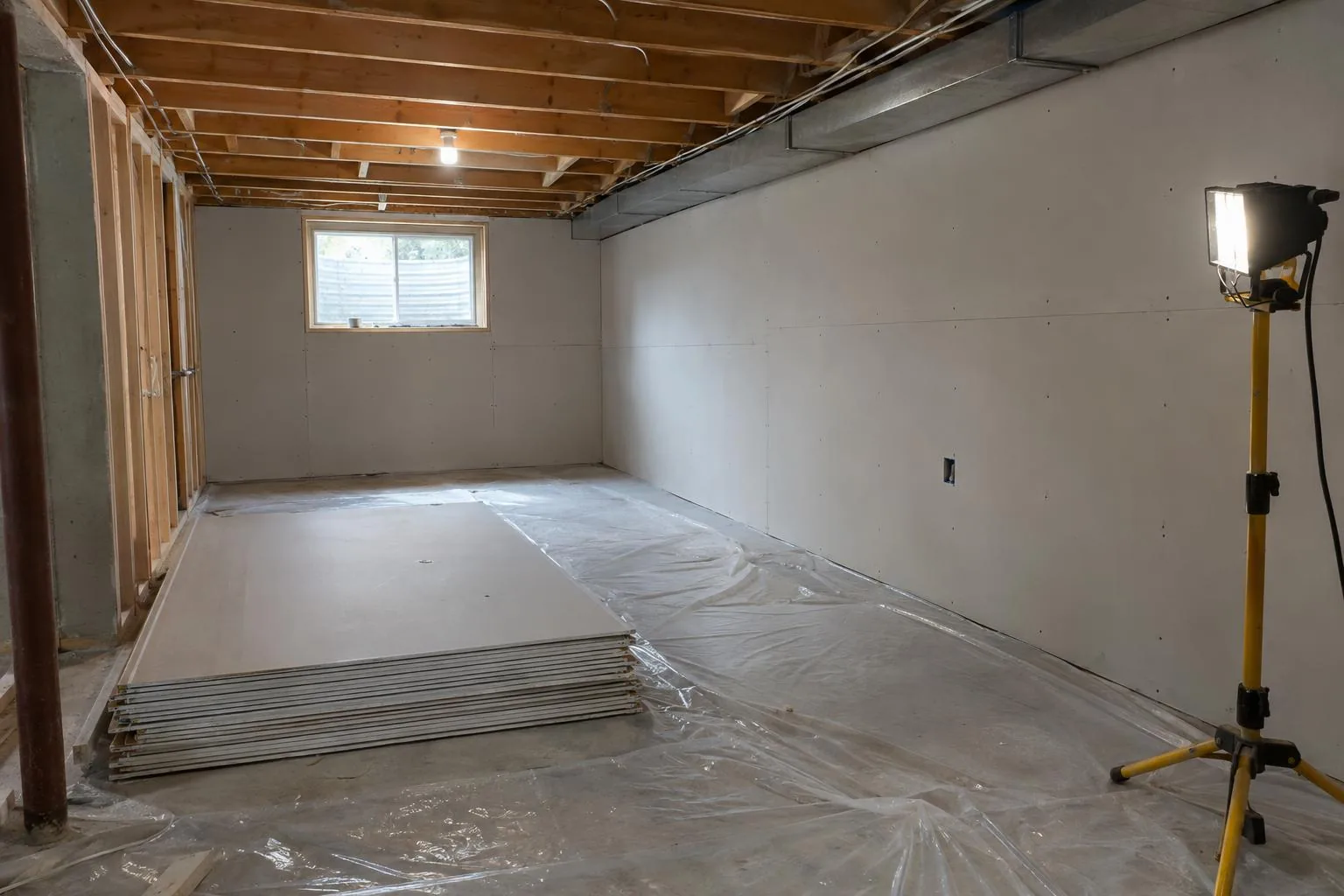
What Basement and Garage Drywall Involves in Kingsport, TN
Below-grade rooms and garages have rules that a bedroom does not, and the board changes from room to room. Your written estimate lists each item below that your basement or garage needs, so you can see how the board is chosen:
- Moisture-resistant board goes on basement walls and in damp utility rooms, where standard board would soften over the years.
- Basement ceiling drywall closes the joists overhead, working around ducts, pipes and the lights that hang from them.
- Hanging walls on finished framing fastens board to the studs once the framing and the electrical are inspected.
- Garage drywall covers the walls and ceiling of a garage so the space is clean, sealed and ready for paint.
- Fire rated garage drywall uses 5/8 inch Type X where the garage adjoins living rooms, including the ceiling when a room sits above.
- Half-inch board is used where a garage adjoins only non-habitable space, which the code allows.
- Taping and finishing buries seams and fasteners under thin coats with dry time between them.
- Sanding and priming ready finish leaves a smooth wall that takes primer evenly.
- Cleanup wipes down the room and removes scrap board and dust.